
Modern digital advertising, especially on Google Ads, feels like navigating a complex maze. You’re pouring budget into campaigns, but are you truly understanding which touchpoints are driving those conversions? It’s not always as simple as the last click, is it? For any `google ads agency` worth its salt, getting attribution right isn’t just a nice-to-have; it’s fundamental to smart strategy and sustainable growth.
Why Traditional Attribution Fails Enterprises
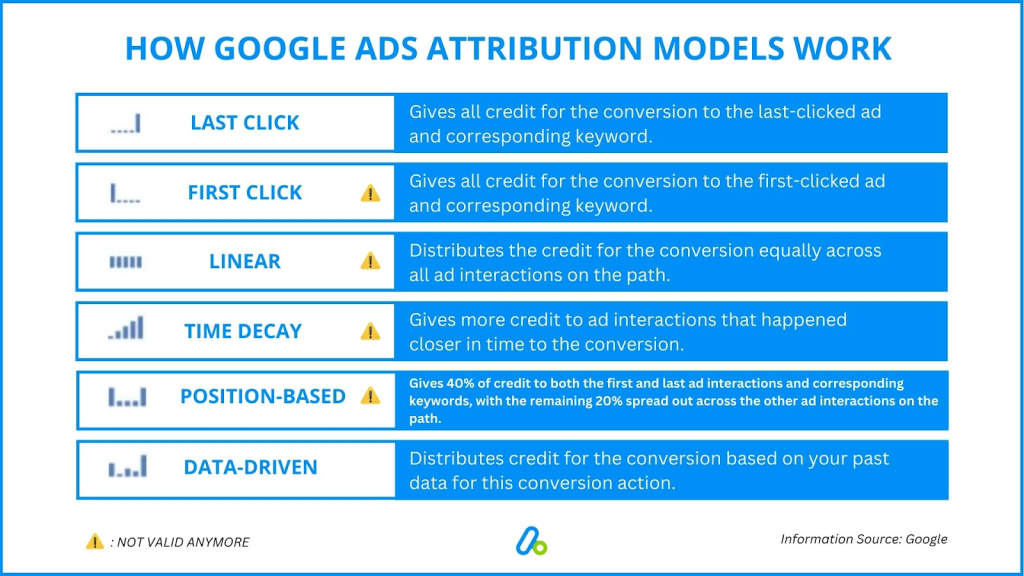
Think about it: your customers don’t just click an ad and buy. They might see a display ad, search later, click a shopping ad, visit your site, leave, come back through a branded search, and then convert. That’s a journey, not a single step. Yet, many businesses, even large enterprises, still cling to last-click attribution. It’s like giving all the credit for a symphony to the final note played, ignoring the entire orchestra. This traditional model, where 100% of the conversion credit goes to the very last interaction before a sale, misses the entire story. It completely undervalues all the crucial touchpoints that warmed up the prospect and guided them along their path. In fact, a study by Google Marketing Insights (2023) (Source) found that customers typically engage with multiple touchpoints across various channels before converting, making last-click attribution increasingly inaccurate for measuring true ROI. And what happens when you’re relying on incomplete data? You’re likely misallocating your precious ad budget. You might be cutting campaigns that are excellent at driving initial awareness or consideration, simply because they don’t get the “last click.” This leads to suboptimal bids, missed opportunities, and ultimately, a less efficient ad spend. It’s a significant blind spot, especially for complex sales cycles or high-value products where the customer journey is rarely linear. A `google ads marketing agency` relying solely on last-click data would struggle to provide truly effective `adwords management services`.
Multi-Touch and Data-Driven Attribution
So, if last-click is outdated, what’s the alternative? The answer lies in embracing multi-touch and data-driven attribution models. These approaches recognize that conversions are a team effort, giving credit where it’s due across the entire customer journey. It’s a philosophical shift from pinpointing a single hero to appreciating the entire narrative. Let’s break down a few key multi-touch models: Linear Attribution: This model distributes credit equally across all touchpoints in the conversion path. It’s a foundational step up from last-click, acknowledging every interaction, but it doesn’t differentiate impact or importance. It’s fair, but not always insightful. Time Decay Attribution: Here, touchpoints closer in time to the conversion get more credit. It makes sense, right? A recent interaction probably had a stronger influence than one from weeks ago. This model is often useful for businesses with shorter sales cycles, where recency plays a significant role in decision-making. Position-Based Attribution (U-shaped): This model gives 40% of the credit to both the first and last interactions, and the remaining 20% is distributed evenly among the middle touchpoints. It values both the initial discovery and the final conversion push, recognizing them as critical “hero” moments in the journey. But for true sophistication, especially for an enterprise-level `google ads agency`, you’ll want to lean into Data-Driven Attribution (DDA). This isn’t a fixed rule-based model; it’s dynamic and intelligent. DDA uses machine learning to analyze all your conversion paths and determine how much credit each touchpoint truly deserves. It looks at the actual impact of each interaction on conversion probability, making it incredibly powerful for understanding complex customer journeys. Google Ads and Google Analytics 4 (GA4) offer DDA, and it’s often the default or recommended choice because it’s tailored to your specific data. It adapts, learns, and provides a much more accurate picture of performance, helping you identify the `best google ads agency` strategies. Choosing the right model depends on your business goals and sales cycle. For most, especially those with robust data, DDA offers the most comprehensive and accurate insights. It helps you understand the true value of every interaction, allowing for more informed decisions about your `agency google ads` strategy.
Tools and AI Enhancements for Clarity
Implementing advanced attribution models, especially DDA, isn’t just about picking a model; it’s about having the right tools and leveraging smart technology. Google’s own platforms are your first line of defense here. Google Ads has DDA built-in, and with GA4, you get even more robust cross-channel data collection, making DDA even more powerful for a holistic view of your marketing efforts. These platforms are constantly evolving, offering enhanced conversions and consent mode to improve data accuracy. But it doesn’t stop there. The sheer volume of data involved in multi-touch attribution can be overwhelming. This is where AI truly shines. AI algorithms can sift through millions of data points, identify subtle patterns, and accurately assign conversion credit in ways human analysts simply can’t match. It’s like having an army of data scientists working around the clock, uncovering hidden truths in your performance data. Platforms like Quickads, an AI-powered ad creation and optimization suite, help marketers automate ad testing, scale creative production, and improve campaign ROI. By integrating insights from advanced attribution, these tools can then automatically adjust bids, optimize targeting, and even suggest creative variations that are more likely to resonate with users at specific stages of their journey. This level of automation and insight is what truly separates a proactive google ads agency from the pack. It allows for more precise budget allocation and better performance across your entire Google Ads account. In fact, companies using AI for marketing attribution have seen a 20% increase in marketing ROI (Marketing Dive) (Source). This isn’t just about reporting; it’s about proactive optimization. When you understand the true value of each touchpoint, you can strategically invest in campaigns that contribute at every stage, not just the final one. It means your `adwords management services` become far more strategic and less reactive. You’re not just managing bids; you’re orchestrating an entire customer journey, connecting the dots from initial awareness to final conversion.
Why This Matters for Marketers
Let’s talk about why this isn’t just a technical detail for the data geeks. For CMOs, founders, and advertisers, understanding advanced attribution means: Smarter Budget Allocation: You’re no longer guessing which campaigns are truly impactful. You know where to invest for maximum return, preventing wasted spend on seemingly underperforming but actually crucial early-stage touchpoints. Clearer ROI: You get a much more accurate picture of your return on ad spend (ROAS). This isn’t just about vanity metrics; it’s about proving the value of your marketing efforts to the C-suite and ensuring every dollar is justified. Enhanced Strategic Decision-Making: With better data, you can make informed decisions about your overall marketing strategy, channel mix, and even product development. You’ll understand what truly drives customer behavior and how to influence it. Competitive Advantage: While many still rely on last-click, embracing DDA gives you an edge. You’ll be optimizing with insights your competitors are missing, leading to more efficient campaigns, faster growth, and a stronger market position. According to HubSpot (2024) (Source), marketers leveraging data-driven attribution report an average of 15% higher ROAS compared to those using traditional models.
Key Takeaways
Moving beyond basic attribution models is no longer optional; it’s a strategic imperative for anyone serious about Google Ads performance. Here are the crucial points to remember: Traditional attribution models (like last-click) often misrepresent campaign performance by ignoring the complex, multi-touch nature of modern customer journeys, leading to poor budget allocation. Multi-touch models (Linear, Time Decay, Position-Based) offer a more nuanced view, distributing credit across various touchpoints, providing a better, though still rule-based, understanding. Data-Driven Attribution (DDA) is the gold standard, using machine learning to dynamically assign credit based on your unique conversion paths, providing the most accurate and adaptable insights. Leveraging tools like Google Ads, GA4, and AI-powered platforms (like Quickads) is essential for effectively implementing and gaining insights from advanced attribution, automating the complex analysis. Accurate attribution leads to significantly improved ROI, smarter budget allocation, and a deeper understanding of customer behavior, giving your business a competitive edge. Partnering with a skilled google ad agency can accelerate your adoption of these advanced strategies, ensuring you’re not leaving money on the table and maximizing your digital ad spend.
Conclusion
The digital landscape is only getting more intricate, and customer journeys aren’t simplifying anytime soon. Relying on outdated attribution models is like trying to navigate a modern city with a paper map from the 90s; you’ll get lost, or at least you won’t find the most efficient route. Embracing advanced attribution, particularly Data-Driven Attribution, isn’t just about tweaking a setting in Google Ads. It’s about fundamentally changing how you understand and optimize your marketing efforts. It’s about moving from guesswork to genuine insight, ensuring every dollar you spend is working as hard as possible. The future of effective Google Ads management, and indeed all digital marketing, is deeply rooted in this level of analytical sophistication.