
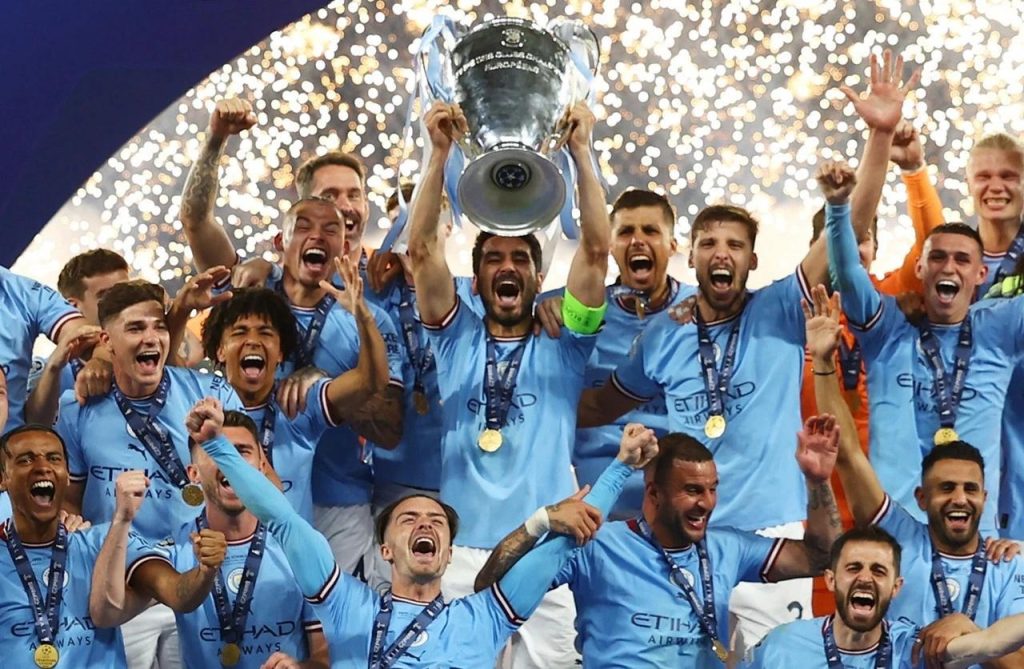
English football has always had stories that captivated fans for generations. Manchester City is a special case: having experienced ups and downs, relegation, being seen as a shadow of their neighbors Manchester United, and then rising to become one of the strongest clubs in the world. Upon closer examination…history of Manchester CityFans not only see the impressive track record, but also feel the journey of building identity, ambition, and the never-give-up spirit of the blue half of Manchester.
For viewers who regularly follow English football on bong da truc tiep dem nay Manchester City is no longer an unfamiliar name. This team represents a modern, fast-paced, disciplined, and highly tactical style of play. However, to understand why Man City has achieved its current position, we need to look back at some important milestones in its past.
Manchester City has risen from a small community team in Manchester to become one of the world’s leading clubs.
The origins of Manchester City
Mentionhistory of Manchester CityThe starting point is often cited as 1880, when the team was founded as St. Mark’s West Gorton. Initially, it wasn’t a professional football club in the modern sense, but rather associated with the local community and church in the east Manchester area. After several name changes, the team officially became Manchester City in 1894, opening a new chapter in its development.
According to kết quả bóng đá đêm qua In its early stages, Man City wasn’t yet a major force in English football. The team needed time to stabilize its organization, build its squad, and establish itself within the league system. Nevertheless, its sense of community and the sky-blue jersey gradually became familiar symbols to the people of Manchester. This was a crucial foundation that helped shape the story of…history of Manchester CityThey always possess a depth that sets them apart from many other highly successful clubs.
The first title and a step forward in English football.
The first memorable milestone inhistory of Manchester CityThis was the FA Cup victory in 1904. It was the club’s first major trophy and helped Man City establish themselves as more than just an ordinary local team. This win provided a significant boost to the team’s progress in English football.
After winning the FA Cup, Manchester City went through many ups and downs. There were times when the team played impressively, but also times when they declined due to changes in squad, finances, and tactics. What keeps Man City’s fans’ love is their resilient identity. Although they haven’t maintained long-term dominance, the team has always been able to create emotionally charged matches.
The golden age of the late 1960s and early 1970s
Another brilliant chapter inhistory of Manchester CityEmerging in the late 1960s and early 1970s, under the leadership of Joe Mercer and Malcolm Allison, Man City won numerous important titles such as the First Division championship, FA Cup, League Cup, and European Cup Winners’ Cup. This was a period when the team possessed a powerful, fast-paced playing style and had many outstanding individual players.
These successes helped Manchester City step out of the shadow of their major rivals. The team not only made its mark domestically but also won titles in European competitions. For long-time fans, this period proved that Man City once had a glorious tradition before entering the modern era of money and superstars.
Today, the Etihad Stadium is a symbol of the global ambition and modern power of the blue half of Manchester.
The years of decline and the lessons learned from failure.
Cannot tellhistory of Manchester CityHowever, this overlooks the difficult period that lasted from the 1980s to the late 1990s. After their defeat in the 1981 FA Cup final, the team began a downward spiral. Man City were relegated multiple times, changed managers, and lost their standing in English football. The nadir was in 1998, when the club dropped to the third division, one of the most painful moments in the team’s history.
However, it was precisely this period that made Man City’s identity so special. Fans still came to the stadium, still sang, and still believed in a comeback. That loyalty is an invaluable spiritual asset. It gave the team a foundation to revive, gradually return to the top flight, and prepare for a historic transformation in the 21st century.
Life-changing events after 2008
2008 was a major turning point inhistory of Manchester CityWhen the club received investment from Abu Dhabi United Group, Man City entered a period of rapid growth in terms of finances, facilities, transfers, and long-term strategy. Big stars arrived one after another, completely transforming Man City’s squad.
The 2011 FA Cup victory was the first sign of their resurgence. A year later, the 2011/12 season saw Sergio Aguero score against QPR in injury time, helping Man City win the Premier League in one of the most dramatic fashion in history. For many, this match symbolized the rebirth of the blue half of Manchester.
The Pep Guardiola era and possession-based style of play.
When analyzinghistory of Manchester CityIn modern times, Pep Guardiola is an unmissable figure. He arrived at Man City in 2016 and has gradually transformed the team into a winning machine. Under Pep, Man City plays football with a philosophy of controlling space, high-pressure pressing, rapid ball circulation, and extremely scientific positional play.
In the 2017/18 season, Man City won the Premier League with 100 points, a historic record for the league. Subsequently, the team continued to dominate English football with incredible squad depth and consistency. Notably, Man City became the first men’s club in English football history to win four consecutive Premier League titles from the 2020/21 to 2023/24 seasons.
A historic treble in the 2022/23 season.
One of the most glorious peaks ofhistory of Manchester CityThat was the 2022/23 season. The team won the Premier League, FA Cup, and UEFA Champions League, completing a historic treble. Their first Champions League title, after a victory against Inter Milan, dispelled many doubts about Man City’s European prowess.
The treble not only signifies a trophy, but also confirms that Man City has reached the stature of a super club. From a team that once dropped to the third division, they have become an icon of modern football. This is the clearest evidence of the strength of long-term strategy, systematic investment, and a consistent football philosophy.
Identity, stadiums, and fans
Besides the title,history of Manchester CityIt is also associated with the color blue, the Etihad Stadium, and a loyal fan base. Before moving to Etihad Stadium, Man City spent a long time playing at Maine Road, considered the club’s home ground with rich memories. The move to the new stadium helps the team expand its scale, upgrade the experience, and better suit its global ambitions.
Today, Man City has a huge global fanbase, including in Vietnam. When watching their matches online…90 PhutThe audience not only watches a strong team, but also witnesses the culmination of over a century of development and transformation.
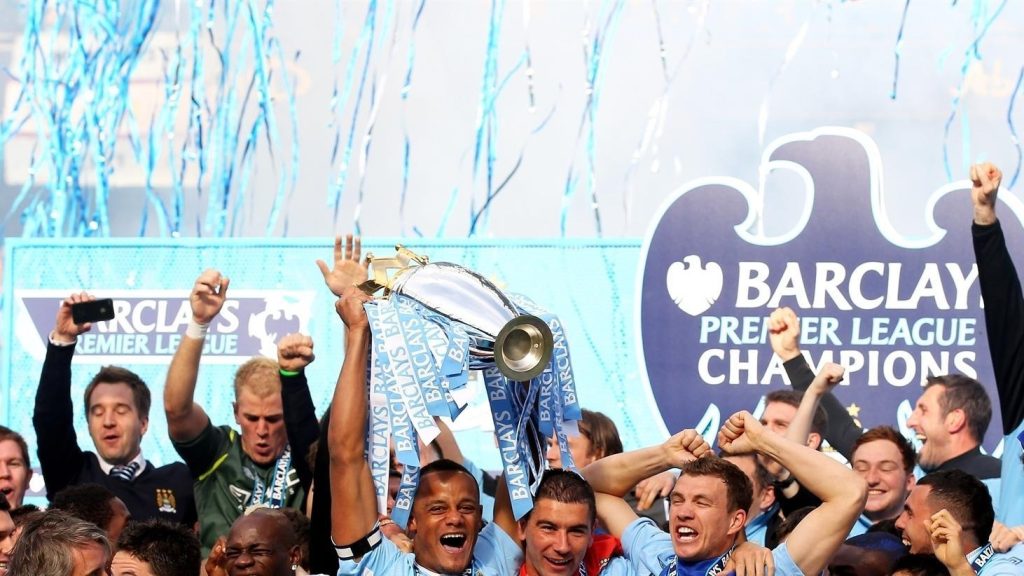
Fans can follow Man City’s exciting matches through familiar platforms like 90Phut.
Summary
Nowadays, when we talk about it…history of Manchester CityFans will remember a team that has suffered painful defeats but never lost its ambition. From St. Mark’s West Gorton to the mighty Manchester City, from Maine Road to the Etihad, from seasons of ups and downs to a historic treble, the blue team has written a special chapter in world football.